Oct 26, 2013

KITTE(キッテ) 丸の内 KITTE Marunouchi 

東京駅前に今年3月オープンした商業施設KITTE(キッテ)。
東京中央郵便局の再開発にともない日本郵便が作ったものだからキッテ(切手)。
「みんな来てね」の意味も込められてるんだそうです。 

Located right near the Tokyo Station, KITTE Marunochi is the first mall run by Japan Post Co, Ltd.
That's why it's named KITTE, which means postage stamp in Japanese.  Also, "Ki-te" means "please come."
They want a lot of people to visit this place.  


KITTE (キッテ)

1931年に建てられた旧東京中央郵便局舎の姿を可能な限り残しながら生まれ変わりました。

KITTE opened this March.  
It was a part of redevelopment of the old Tokyo Central Post Office.
It maintains the look of the former building, which was built in 1931 as one of the largest post offices at that time.
2008年まで使用された旧局舎  Former Tokyo Central Post Office  was used until 2008.
 (Photo from Wikipedia )

とはいえ、中は様変わり。

But I'm sure they changed the inside completely,


残っているのはこの郵便局長室くらいでしょうか?

Except this postmaster's room. 


たくさんのお店やレストランが入っています。

It has many shops and restaurants.

レストランは日本各地から集結。
大阪の串カツ、伊勢牛のすき焼き、仙台の牛タン、博多のもつ鍋などなど。
ちなみに私の故郷松山からもおいしいピザの「ダ・ボッチャーノ」が出店していますよ。(「坊っちゃん」だからボッチャーノ。 (^_-) )

Restaurants are selected from all over Japan.  You can have motsu-nabe from Fukuoka, Kushikatsu from Osaka, Sukiyaki from Ise, etc, etc.  They have Italian restaurant Da Bocciano from my hometown Matsuyama, too! (I told you, we love Bocchan. (^_-) ) 

お店も良質なこだわりのお店が多くて、見てるだけで楽しいですよ。
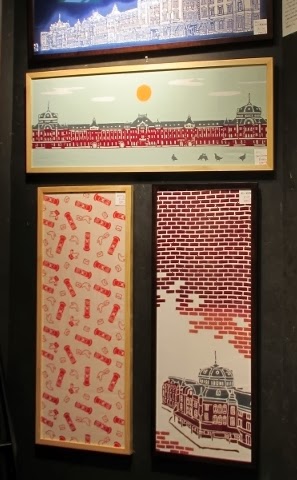
この手拭い屋さんの手ぬぐいも本当にきれい。

Their shops are fun to look around.
They have unique, high-quality staff.
I like these colorful Tenugui (thin cotton towel) . 


東京駅舎柄や、昔の郵便ポスト柄も。Tokyo Station Tenugui and Mail Box Tenugui

ユニークな博物館「インターメディアテク」というのもあります。東京大学が開学以来集めてきた資料、たとえばいろいろな骨格標本、鳥の剥製、石や虫、それに機械などがおいてあります。まるでハリーポッターのホグワーツ学校にいるような気分になります。(しかも無料)
写真は撮れなかったので、どんな雰囲気か、よかったらユーチューブのここでご覧ください。

Also, they have a very unique museum INTERMEDIATHEQUE.
It exhibits the scientific and cultural heritage accumulated by the University of Tokyo, such as skeletons of all kinds, big and small, mounted birds, insects, rocks, machines, etc. etc.
I like its atmosphere.  It's like Hogwarts School! (And it's free.)
It wasn't allowed to take photos inside, but if you are interested, you can see it on youtube here .


ルーフガーデンも特等席です。

Their roof garden enjoys privileged view.


東京ステーション駅舎がよく見えます。 Tokyo Station Building 

東京駅の電車もよく見えます。
ひっきりなしに電車が出たり入ったり。これだけの電車が毎日、安全に運行されるなんて、改めてありがたいことだと感心します。

You can also enjoy watching trains.  A lot of them.
It's amazing to see so many trains coming and going every minute. 


もし機会がありましたら、ぜひ「キッテ」くださいね。オソマツ!(^_^;)

I hope you can come and see KITTE someday. 
Please "Ki-te". (^_^;)


にほんブログ村 英語ブログ 国際交流へ

Oct 23, 2013

万博記念公園 Expo Commemoration Park in Osaka

万博記念公園は大阪吹田市にあって、264ヘクタールもある広大な公園です。
先日、初めて行ってきました。

Expo Commemoration Park is in the north of Osaka.
It's a huge, 264-hectare wide park.

初体面 (*^_^*)
I visited there for the first time, and finally met this famous
岡本太郎(1911~1996)の「太陽の塔」。

"Tower of the Sun" by Taro Okamoto(1911~1996).  
It's a symbolic landmark of the Expo'70.

おっきいです!65メートルあるんだそうです。
顔は3つあって、一番上にあるのが「黄金の顔」。未来を表しているとか。
中央にあるのが「太陽の顔」。現在を表します。

It's big, about 65 meters tall.
It has three faces.
One at the top is "Golden Mask," which represents the future.
Below it is "Face of the Sun," which represents the present.

後ろにあるのが「黒い太陽の顔」でこちらは過去を表しているのだとか。
One on the rear is "Black Sun,"
which represents the past.

公園のあちこちから見ることができます。

You can see it from many part of the park.
3つも顔があるのでへんかもしれないですが、この姿勢がなんとなくジブリ映画「千と千尋の神隠し」に出てくるカオナシに思えました。
Though it has three faces, it somehow reminds me of  No-Face from the movie "Spirited Away." 


 イサム・ノグチの「月の世界」と With "Moon World" by Isamu Noguchi

日本庭園からも見えます。View from the Japanese Garden

この日本庭園は、万国博覧会に政府が出展したもので、日本の造園技術の粋を集めて造られた名園です。

Japanese garden is also a must to see.
It was a Japanese Government Exhibit of the Expo '70, and was built, as you can imagine, with the best landscaping technique, and selected best trees.   

bamboo forest

 このトウカエデがカラフルできれいでした。
I liked this tree, Acer Buergerianum.  It was very colorful.  

公園では季節ごとに沢山の花を楽しむことができます。
桜、チューリップ、睡蓮にバラ…。
ちょうど今は「コスモスフェスタ」が開かれています。

Varieties of flowers bloom seasonably in the park, such as cherry blossoms, tulips, lotus, roses and so on.
Right now, they are having "Cosmos Festival."


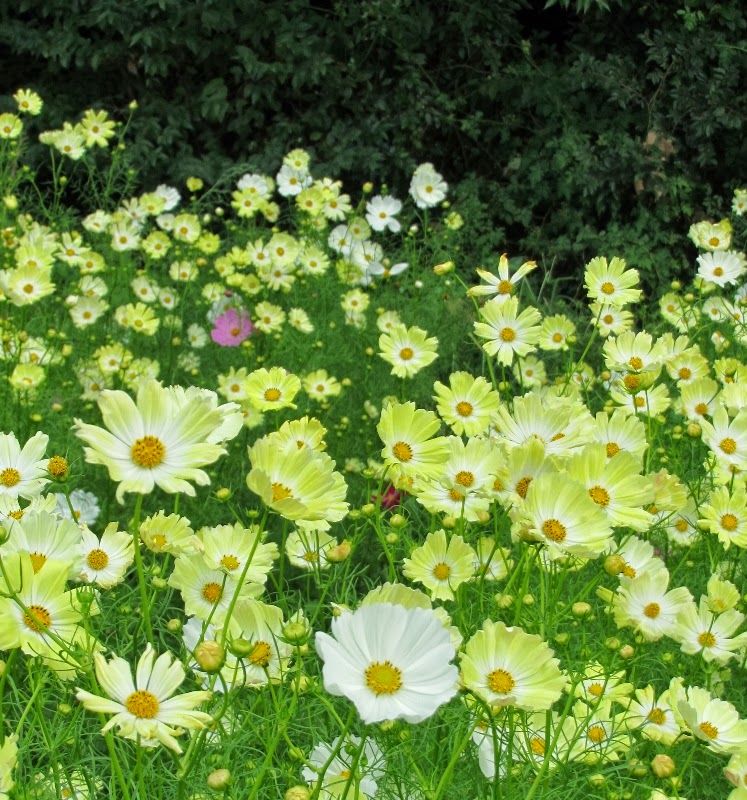
黄色のコスモス 珍しいですね。yellow cosmos

ひまわりもきれいでした。 sunflowers, too

とても気持ちのいい一日を過ごすことができました。
でもあんまり広くて、全部を見ることはできませんでした。
また機会があったら、ぜひ行ってみたいと思います。(^^)

I enjoyed the park very much, but it was too big to see it all in just one visit.
I hope I can visit there again, in different season. (^^)


にほんブログ村 英語ブログ 国際交流へ

Oct 7, 2013

76景 神田紺屋町 View 76 Kanda Kon-ya-cho


染め上げられたばかりの浴衣地が屋根の上に設けられた干場で風に揺れています。
神田紺屋町は江戸時代、文字どおり、藍染職人の町でした。

Long strips of freshly dyed cotton fabric are swinging in the air.
They are being dried on platforms on dyer's roofs.
This is Kanda Kon-ya-cho, the indigo dyeing mecca of Edo.


揺れている浴衣地はデザインもさまざま。

浴衣をご存知ない方たちのために、恥ずかしながら私の浴衣をちょっとご紹介。(ちょっとしわが気になるけれど。(>_<))

I like those colors and patterns of the fabrics.
They are for summer kimono, yukata.

If you don't know what yukata is, this might give you some idea.  
These are my yukata (that needed ironing (>_<)). 

最近はいろいろな色の浴衣がありますが、私のはみんな青です。
These days, yukata comes in so many different colors.  But mine are all in different shades of blue.
朝顔のろうけつ染め batik-printed morning glory
 
とんぼ dragonfly
なんの花でしょう?maybe some kind of orchid (?)
一番気に入っているのは、これ。This one is my favorite.  If you look at it closely,
よく見ると絞りって気が遠くなりそう。
 you can see that it is finely tie-dyed.  This method is called shibori.

広重は、中央の白い生地にちょっとした遊び心を隠しています。
前2枚には「魚」の字のデザイン。これは版元の「魚栄」さんのため。
後の2枚には四角の中に「ヒ」の字。これは広重の「ヒロ」をデザインしたものだそうですよ。

In Hiroshige's print, monogrammed white fabrics are swinging in the center.
Two in the front bear designed letter 魚, in honor of the ukiyoe publisher, Uoei (魚栄).
Two in the back bear Hiroshige's monogram; ヒ in a square. 
(Hiro is ヒロ in katakana.)


富士山が見えるということは、これは西方を望んだ絵ということになります。
緑の中にはちゃんと小さく江戸城の富士見やぐらも描かれていますよ。
現在も富士見やぐらは皇居東御苑で見ることができます。

Mt. Fuji is soaring, by which we can tell this is the westward view.
In the middle distance, surrounded by green trees, stands Fujimi Yagura (Mt. Fuji-viewing Tower) of Edo Castle.
And it's still there. 
富士見やぐら
Fujimi Yagura (Mt. Fuji-Viewing Tower) seen from East Gardens of the Imperial Palace.

さあ、神田紺屋町に行ってみましょう。

Now, let's go and see what Kanda Kon-ya-cho is like today.
大通りにはお店やオフィスが立ち並んでいます。
busy main street with shops and office buildings 

一歩脇道に入ると、マンションや小さな会社が並んでいました。
side streets with small offices and apartments

藍染に関係するものは何も見つけられませんでした。
ただ、大通りに面して案内板が立っています。

But I could't find anything related to indigo dyeing industry in the area. 
The only thing I found was this sign board.

町名由来板。その説明によれば、江戸時代初期土屋五郎右衛門という紺屋頭が家康から関東一円の藍の買い付けを許され、配下の藍染職人とともにこの辺りに集まって住んでいたそうで、いつしか紺屋町と呼ばれるようになったんだそうです。

It said,
"At the beginning of 17th century, this area was controlled by Tsuchiya Goroemon, a dyer who was given permission by the Shogunate to purchase indigo in the Kanto region. It gradually became a dyeworks community."

And that's why this town was called Kon-ya-cho (kon=dark blue, ya=shop, and cho= town).


1856年、ちょうど広重のころの地図がのっていました。

This is the map of the area in 1856.
この地図は南が上になっています。案内板の前の東西の道が右から順に紺屋一丁目、二丁目、三丁目です。
This is a south-up map.
The red circle in the center is where this sign board stands.
The horizontal street right by it is called Kon-ya-cho 1chome, 2chome, and 3chome from right to left.

2003年の地図と比べてみてください。Map of the area in 2003 


案内板が立っている大通りが紺屋町ということでよさそうです。
さてではそこから西を眺めると…。

So, I decided, this main street where the sign is is where I'm taking today's photo.
I looked to the west, and this is what I saw. 

神田駅です。 Kanda Station (^^)

全然違っていました。 

It was very different. 


にほんブログ村 英語ブログ 国際交流へ